Paver Sealing Phoenix | Restore Faded, Stained Pavers
Faded pavers? Oil stains on your driveway or a pool deck that never looks clean? Phoenix sun is tough on outdoor surfaces. At Arizona Saltillo & Tile Restoration, we clean and seal patios, driveways, and concrete pavers to help reduce staining and UV fading. For paver sealing Phoenix, text us a few photos. We’ll help you figure out what your pavers need.
- Insured
- Five-star Google reviews
- Free photo quotes
Get a Free Quote
- Five-Star Reviews
- Fully Insured
- Free Estimates
- Residential & Commercial
- Family-Owned
About Arizona Saltillo & Tile Restoration
We’re a family-owned restoration company led by Nathan Morar. We work with Saltillo, travertine, and natural stone, and we know each surface needs different care. Looking for a paver sealing company Phoenix homeowners can speak with directly? We inspect the pavers before recommending a sealer. Concrete, flagstone, and outdoor Saltillo don’t all respond the same way. One sealer for everything usually ends badly. Want to know who’s behind the work? Meet Nathan and our team on our About page.
Our Paver Cleaning and Sealing Services
Not all pavers need the same treatment. We look at the material and its condition before choosing a sealer.
Concrete and Brick Paver Sealing
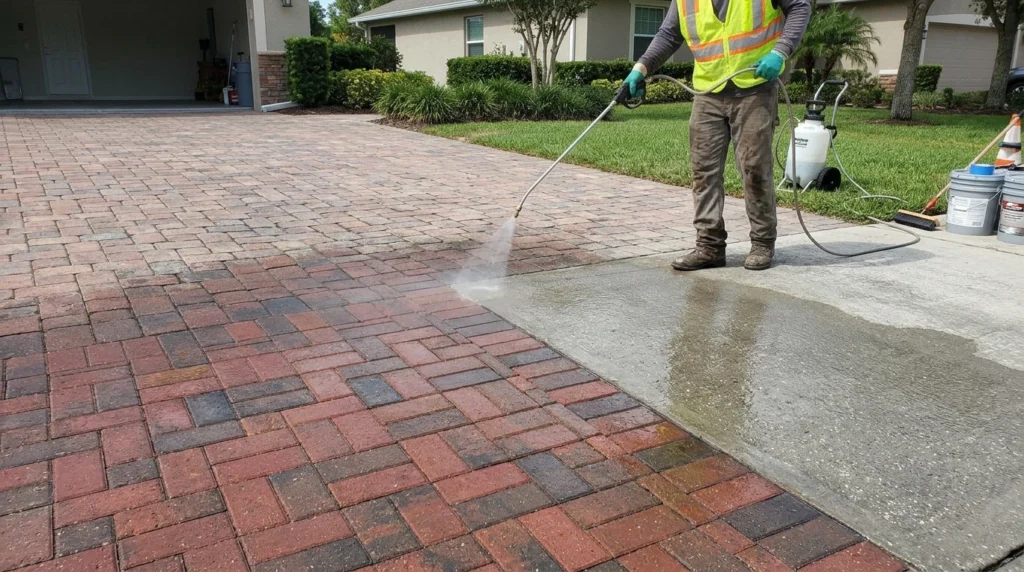
Concrete, brick, and interlocking pavers are common on Valley driveways. We clean the surface, check joint sand, and re-sand where needed before sealing. That’s part of our driveway paver sealing Phoenix service.
Travertine and Natural Stone Sealing
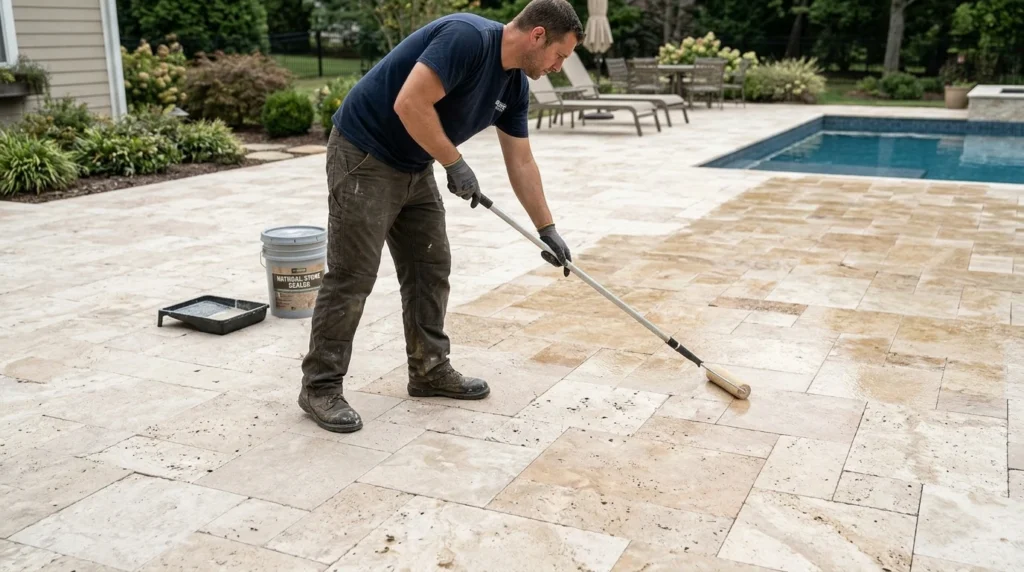
Travertine pavers and limestone need careful cleaning. Harsh products can damage the surface. For travertine paver sealing Phoenix, a penetrating sealer may be a good fit. We also offer travertine polishing for surfaces that need more attention.
Flagstone and Outdoor Saltillo Sealing
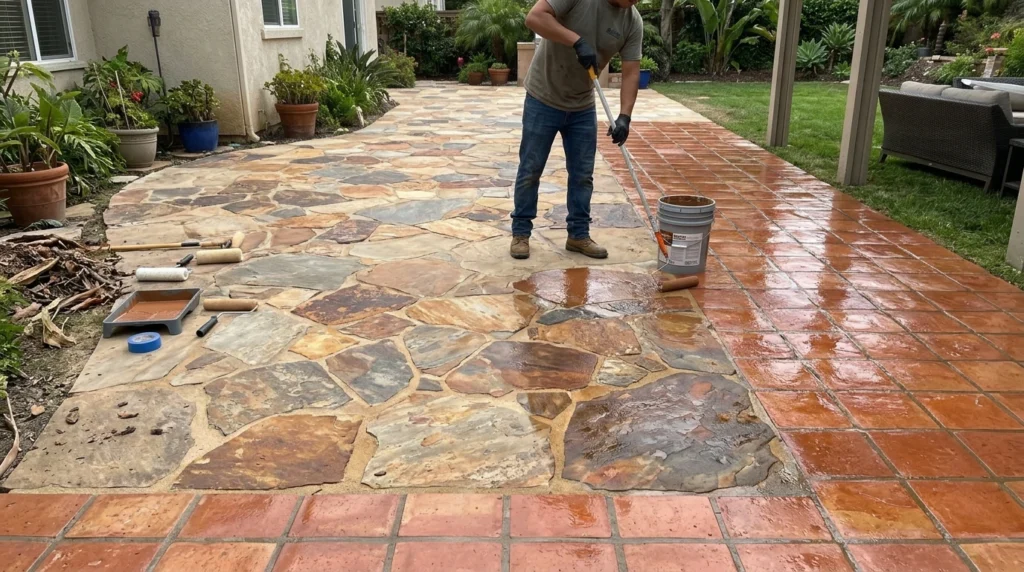
Flagstone traps dust in its uneven surface, while outdoor Saltillo absorbs moisture easily. Both need proper preparation and a suitable sealer. For flagstone paver sealing Phoenix homeowners can ask us about the right treatment for their surface. Explore our outdoor Saltillo restoration and natural stone cleaning and sealing services for related work.
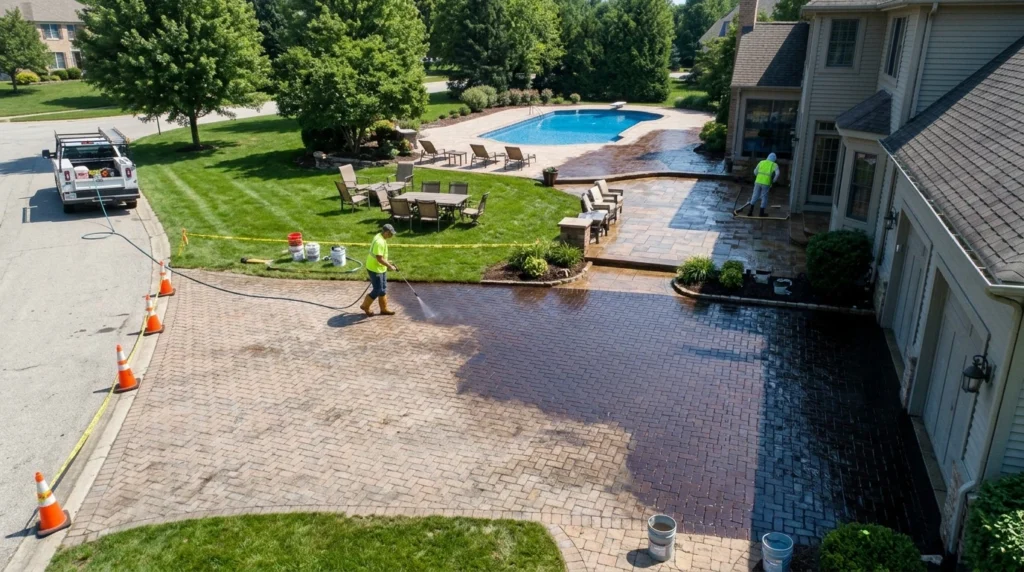
Patio, Pool Deck and Driveway Sealing
Pool decks deal with chlorine, water, and constant foot traffic. For pool deck paver sealing Phoenix, we consider low-sheen finishes and suitable anti-slip additives. A wet surface can still be slippery, even after sealing.
Common Paver Problems in Phoenix
Phoenix sun can leave pavers faded and chalky, while monsoon storms may wash away joint sand, leaving room for weeds and ants. Irrigation water can leave white deposits, and dust storms bring dirt and stains. These are common issues homeowners notice when looking for paver sealing Phoenix services.
Peeling, yellowing, or cloudy patches can also signal trouble with an older sealer. These problems may need more than another coat.
Hard Water Stains and Efflorescence on Pavers
White, chalky deposits on pavers are common in Phoenix, especially near fountains, irrigation lines and AC drains. They can be hard water minerals or efflorescence on pavers, and sealing over them traps the problem. We identify the cause first, clean with a product that suits your pavers, and only seal once the surface is ready.
Joint Sand, Weeds and Ants
Monsoon rain and pressure washing can wash paver sand out of the joints, which leaves gaps for weeds and ants. We check the joints and re-sand where needed before sealing. If the sand keeps washing out, we will tell you about joint-stabilizing options.
Our Paver Cleaning and Sealing Process
Every paver cleaning and sealing Phoenix project starts with checking the surface. Here’s how we typically handle the work:
Surface Inspection
We check the paver material, old sealer, stains, and overall condition.
Paver Cleaning
We use a surface cleaner and pressure washing, adjusting the pressure for each material to avoid damage.
Joint Preparation
If joint sand is low or washed out, we re-sand where needed.
Drying and Moisture Check
We check that the pavers are dry enough before applying the sealer.
Sealer Application
Depending on the surface and product, we apply the sealer using a sprayer or roller.
Final Walkthrough
We explain the finish, cure time, and basic aftercare before wrapping up.
Not sure which one you need? Send photos and we will tell you.
Best Time to Seal Pavers in Phoenix
Pavers need to be clean and completely dry before sealer goes on, so timing matters. The best time to seal pavers in Phoenix is a dry day with no rain in the forecast. Spring and fall often give the easiest conditions, and we avoid sun-baked surfaces in the afternoon. A monsoon storm soon after sealing can leave a cloudy or hazy finish, so we do not seal when rain is likely.
Paver Sealer Types, Finishes and Common Issues
Paver sealers come in different types and finishes, including wet-look, natural-look, and glossy options, each offering different levels of protection and appearance. Common issues include peeling, whitening, bubbling, and uneven finishes, often caused by poor application or moisture.
01
Natural, Matte and Wet-Look Finishes
A penetrating sealer works below the surface and generally keeps a natural, matte look. Film-forming sealers can add a satin, gloss, or wet-look finish that brings out the color. Around pools, we pay extra attention to traction, since some finishes can get slippery when wet.
02
White Haze, Peeling and Failed Sealer
Noticed white haze on pavers after sealing? Trapped moisture, efflorescence, or a heavy sealer coat could be behind it. Peeling is another sign something isn’t right. Sometimes paver sealer removal is needed before resealing. Other times, cleaning may be enough. We’ll check the surface first and explain your options.
Paver Sealing Cost in Phoenix
Wondering about paver sealing cost Phoenix homeowners typically pay? The price depends on square footage, paver type, and surface condition. A clean patio usually needs less prep than a driveway with oil stains, rust stains, washed-out joint sand, or an old sealer that needs stripping. Your choice of paver sealer and finish also affects the price.
We don’t guess from a desk. Text us a few photos and your approximate square footage to get started. If we need a closer look before giving you a quote, we’ll arrange an inspection.
For a rough benchmark on paver sealing cost per square foot, Angi reports that cleaning and resealing pavers averages about $2 per square foot, with most projects between $300 and $550. HomeGuide’s figures run from $1.50 to $3.25 per square foot when cleaning, joint sand and sealing are included. These are national figures, not a Phoenix price.
What Sets Arizona Saltillo & Tile Restoration Apart
Owner Nathan Morar believes in checking the problem before recommending a fix. That’s the approach we bring to paver sealing Phoenix projects.
- Honest Recommendations: If a simple cleaning or reseal is enough, we’ll tell you.
- Careful Preparation: We check the surface before starting, rather than rushing straight to sealing.
- Clear Estimates: You’ll know what work is included before we begin.
- Personal Attention: Nathan stays involved from the first conversation through the final walkthrough.
Have questions about your pavers? Tell us what’s going on, and we’ll talk through the next step.
Paver Sealing Across the Phoenix Valley
We seal pavers across Phoenix and nearby areas, including Scottsdale, Tempe, Mesa, Chandler, Gilbert, Glendale, Peoria, and Paradise Valley. We’re also familiar with properties around Arcadia and Ahwatukee.
Phoenix Valley
- Phoenix
- Scottsdale
- Tempe
- Mesa
- Glendale
- Chandler
- Gilbert
- Peoria
- Paradise Valley
- Cave Creek
- Fountain Hills
- Apache Junction
West Valley
- Surprise
- Goodyear
- Avondale
- Buckeye
- Litchfield Park
- Sun City
- Sun City West
- El Mirage
- Tolleson
- Anthem
- Queen Creek
- Laveen
Not sure if we cover your neighborhood in Maricopa County? Give us a call.
Paver Sealing FAQs
That depends on the sealer and how much sun and traffic your pavers get. A busy driveway may need attention sooner than a shaded patio. Many Phoenix contractors quote roughly 1 to 3 years in full sun. Ask what the sealer we use is rated for.
There's no fixed schedule for every surface. We look at the condition of your pavers and the existing sealer before suggesting another coat. As a general guide, many contractors suggest resealing about every 2 to 3 years, but we check your pavers first.
It depends on the size and condition of the area. If there's old sealer to remove or joints to repair, that can add to the cost. As a rough national benchmark, Angi’s average to clean and seal is about $2 per square foot, and small jobs often cost more per square foot.
They can be, but timing matters. Some pavers need time before sealing, so it's worth checking the material and product instructions first.
It can, depending on the sealer and finish. We can go over the options with you, including finishes better suited to wet areas.
That depends on the product and the weather. We'll let you know how long to keep your car off the driveway once the work is done.
Usually, yes for exposed driveways, patios and pool decks. Sealing helps slow UV fading, resist oil and hard water stains, and keep joint sand in place. It will not fix sunken, cracked or failing pavers, and we will tell you if that is your problem.
Pick a dry day with the pavers fully dry and no rain in the forecast. Spring and fall often work well. We avoid sun-baked surfaces and monsoon weather, because heat and rain can both spoil a fresh coat.
Only once they are completely dry. Rain soon after sealing can leave cloudy or white patches. We check moisture and the forecast before we apply sealer.
Yes. We travel across the Valley. Text a few photos and your approximate square footage, and we will tell you what your pavers need.
Get Your Free Paver Sealing Quote
Not sure if your pavers need cleaning, resealing, or old sealer removed? Tell us what’s going on. Call or text a few photos to (623) 633-3874, or fill out the form below. We’ll help you figure out the next step.